Shopping note: We discuss what to look for, rather than claim hands-on testing. Current shopping links are ordinary retailer links. Affiliate disclosure.
Take a familiar piece out of office mode
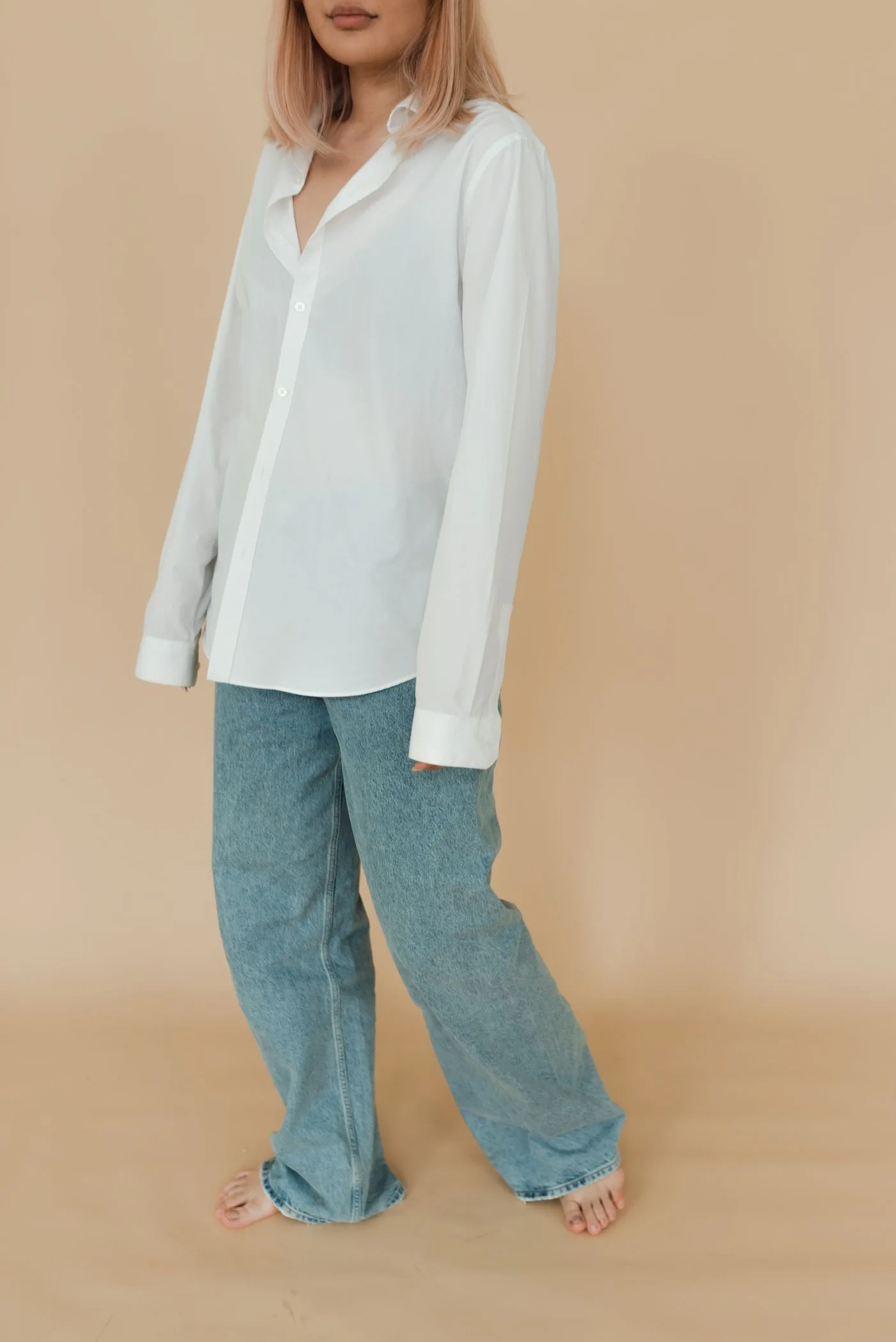
A white shirt can feel formal simply because it is always worn with the same trousers and shoes. For a weekend of groceries, a café stop and a walk through a New York neighborhood, change the surrounding pieces before deciding you need a more casual shirt. Straight jeans, a practical bag and comfortable footwear shift the mood immediately. Leave enough ease through the shoulders to carry shopping or lift your arms without pulling the front buttons. Relaxed dressing still depends on a good working fit.
Begin with a shirt you can wash and care for comfortably. If it is reserved for important meetings because the fabric marks easily or needs constant pressing, it may not be the best weekend candidate. Off-duty clothes should let you participate in the day rather than manage the garment at every stop.
Use the collar and sleeves to set the tone
An open collar and a tidy sleeve roll can make a structured shirt feel less exact. Fold cuffs rather than pushing a tight sleeve into a bulky bunch, and check that the roll stays comfortable when bending your elbows. With a soft or oversized shirt, leaving it open over a simple tank provides another option. Look at the neckline and underlayer together in daylight so that the arrangement feels intentional from more than one angle.
Tucking is a choice about proportion and comfort, not a requirement. A full tuck creates a clearer waist and can help a long shirt sit under a short jacket. An untucked hem works when it does not bunch awkwardly under your coat or catch on bag hardware. Try walking and sitting with each version; a styling choice that needs constant adjustment is unlikely to become a favorite.
Let fabric decide the season
The phrase white shirt covers very different garments. Crisp cotton may hold its shape, a softer weave may drape, and linen can show visible creasing as part of its character. Read the actual composition rather than choosing by the product title alone. For warm weather, check opacity and breathability with the underwear or tank you intend to wear. In cooler months, a shirt needs enough room to sit comfortably beneath knitwear without pulling at the armholes.
Texture can keep a simple outfit interesting. Pair a smooth shirt with denim or a softly ribbed layer, then stop before adding accessories only to make it look more complex. If you like an all-light palette, compare the whites in natural light. Cream, ivory and bright white can work together, but the differences should feel chosen rather than discovered only after leaving home.
Compare details before shopping
If you need a new shirt, decide whether the main job is standalone wear, layering or both. Collar stiffness, hem length and cuff shape affect those roles. Everlane, Madewell and Uniqlo offer places to compare everyday shirt shapes, but read current measurements and reviews with your own proportions in mind. A model's height can provide context; it cannot establish where the shirt will fall on you. Measure a shirt that already works and use it as the reference.
A second shirt is worth considering only if it performs a different job or solves a laundry gap. Buying several near-identical versions before wearing the first can leave you with the same fit problem multiplied. Check care costs and return conditions alongside the purchase price. Consider secondhand cotton shirts when you can verify condition, collar wear and measurements, especially if you are experimenting with a new silhouette.
Three combinations from existing clothes
For brunch, try the shirt tucked into straight jeans with loafers and one small piece of jewelry. For errands, wear it open over a tank with comfortable trousers and a crossbody bag. For a cooler evening, layer a fine knit over the shirt and let a little collar or cuff show. These are starting points rather than a shopping list. The useful discovery is which version feels natural enough to repeat next weekend.
Give the shirt a quick maintenance check before the weekend starts. Inspect the collar, cuffs and buttons, then deal with any loose thread or small repair before it becomes a rushed morning task. A well-kept shirt you already like can feel more appealing than a new one that has not yet found its place. Keep the care routine consistent with the fabric label rather than using one method for every white garment.
Before you decide
- Check movement at shoulders and front buttons.
- Look at opacity in daylight.
- Test tucked and untucked versions while sitting.
- Measure a shirt you already like.
- Choose care requirements you can maintain.
A few useful answers
Does a casual white shirt have to be oversized?
No. A shirt with enough room for comfortable movement can look relaxed through styling alone. Oversized cuts are one option, but excessive fabric may be awkward under jackets or when tucked into a waistband.
How do I avoid buying another office shirt?
Name the weekend job before shopping. Compare softness, hem length and layering space against the shirts you already own, then try the candidate with casual shoes and denim rather than office trousers.
Published and last updated February 24, 2026. Send an editorial correction.