Shopping note: We discuss what to look for, rather than claim hands-on testing. Current shopping links are ordinary retailer links. Affiliate disclosure.
Pack the routine you use at home
A toiletry bag becomes crowded when a short trip feels like the opportunity to try every sample in the drawer. Begin with the routine you already know and the length of the journey. List the products needed for washing, personal care and any specific daily requirements. Then check what the accommodation provides. A weekend departing from New York may need a much smaller selection than a longer trip, but familiar essentials deserve priority over a collection of unfamiliar miniature products.
Keep prescription medicines and medical needs separate from casual beauty editing. Follow the relevant professional advice and travel requirements for those items. For ordinary toiletries, the goal is to avoid duplication while maintaining a comfortable familiar routine. Do not remove something you genuinely need merely to make the bag look impressively minimal.
Verify rules for the actual journey
Liquid and baggage rules can differ by airport, country and travel method, and they can change. Check the official guidance for your departure, connections and return journey before packing. Do not assume the rules from a previous trip still apply. Confirm how containers must be presented and whether any exceptions are relevant to your circumstances. A toiletry organizer marketed for travel does not by itself establish compliance with a particular security process.
Leave enough time to reorganize at the airport if required, but do the main work at home. Keep items that need inspection accessible rather than buried beneath clothing. For a road or train journey, leakage and access still matter even when airline liquid limits do not apply. The transport rules and the practical organization are related questions, not the same question.
Choose containers you can recognize
If transferring a product is appropriate under its instructions, use a suitable clean container and label it clearly. Include enough information to distinguish similar-looking products. Avoid repurposing a container when the material, closure or previous contents make it unsuitable. Some formulas have specific packaging or storage requirements, so do not assume every product can be safely decanted. An original travel-size package can be simpler when it preserves essential instructions and identification.
Test the closure before putting a container beside clothes or electronics. Keep liquids contained separately where practical, and remember that a pouch does not make every bottle leakproof. Leave room to handle the items without squeezing them against a rigid zip. A bag that closes only with force may be too full, regardless of how neatly the products were arranged.
Make new purchases answer a specific problem
Sephora and Nordstrom offer starting points for comparing travel-size beauty products and organizers. Read current sizes, labels and returns directly. Buy a miniature because you need that product in a practical format, not because the packaging is appealing. Smaller sizes can cost more relative to the amount supplied, and several trial products may be less useful than a suitable container for something you already use. Compare the actual trip requirements before deciding.
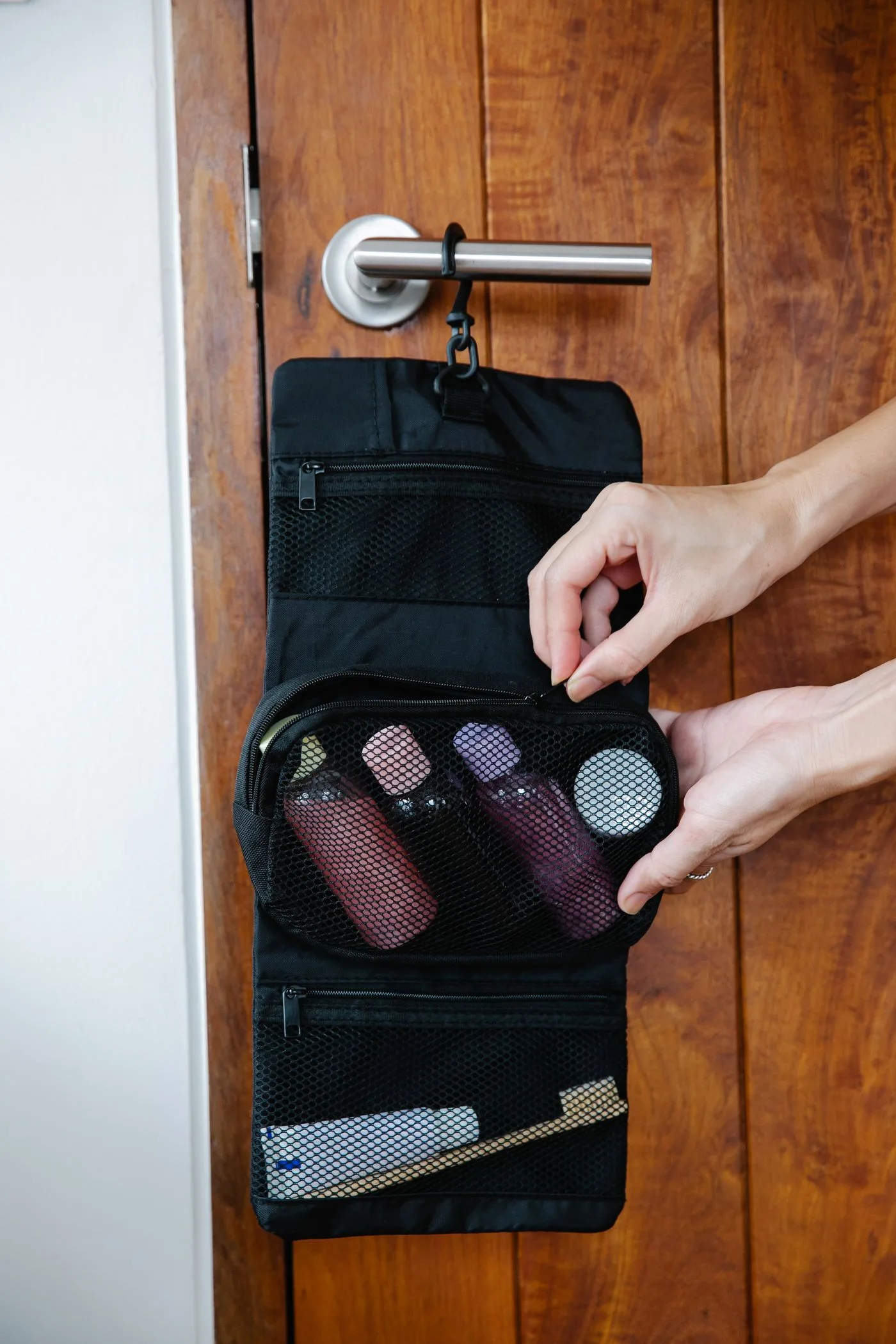
An organizer should fit the products and your luggage rather than dictate a larger collection. Check dimensions, opening style and cleaning guidance. A hanging design can help in some bathrooms but adds little if there is nowhere convenient to hang it. A simple washable pouch may be enough. Consider what you can already use before buying a specialized travel system for one short break.
Do the return edit too
After the trip, empty the bag rather than leaving it packed indefinitely. Clean and dry containers as instructed, inspect closures and note what was unused or ran out. Keep a brief packing list for the next similar journey, updated with what you learned. Travel toiletries should make a familiar routine portable. The useful edit is one that reduces unnecessary weight while keeping the products you rely on identifiable, suitable and easy to reach.
Photograph the packed contents or keep a plain list for the next journey. Include practical notes, such as a closure that leaked or an amount that was more than necessary. Review the list against the next trip's rules and duration rather than copying it automatically. A personal record can reduce repeated trial purchases while keeping the packing process responsive to the journey you are actually about to take.
Before you decide
- List the familiar routine and trip length.
- Check current official transport guidance.
- Keep medical needs under appropriate advice.
- Label suitable transferred products clearly.
- Unpack, clean and review after returning.
A few useful answers
Should I buy travel sizes of everything?
Only where the format solves a real need. Check whether you already have suitable products and whether transferring is appropriate. Original small packaging can be useful, but a complete miniature collection is not automatically necessary.
Can I rely on the rules printed on a travel pouch?
Verify the official requirements for your actual departure, connections and return. A product description may be outdated or intended for a different jurisdiction. Treat the pouch as an organizer rather than proof of compliance.
Published and last updated September 24, 2026. Send an editorial correction.