Shopping note: We discuss what to look for, rather than claim hands-on testing. Current shopping links are ordinary retailer links. Affiliate disclosure.
Choose the result before choosing products
A five-minute makeup routine is a small set of decisions you already understand, not a promise that a particular collection of products will work for everyone. Decide what helps you feel ready on an ordinary morning. It might be evening out a small area, defining the brows or adding color to the lips. Keep those priorities separate from the elaborate routine you enjoy when there is more time. The daily bag should serve the morning you actually have before leaving a New York apartment for work.
Take out the products you currently use and note which ones consistently earn their place. An unfamiliar multitasking formula may sound efficient but require more blending or tools than the separate products you know. Start by editing the existing routine before shopping for a new one. Familiarity can save more time than a clever product description.
Make each step easy to repeat
Arrange the chosen products in application order and practice the routine when you are not rushing. Notice where time disappears: searching for a brush, correcting a shade mismatch or opening several similar products to decide between them. Keep one reliable option for each job in the daily bag. Store occasional colors elsewhere so the morning selection stays clear. A small routine can still be enjoyable when the choices are deliberate rather than crowded.
Use products according to their labels, including guidance about suitable areas of use. A product marketed for multiple areas should state those uses; do not assume every lip formula belongs near the eyes. If a product irritates your skin or eyes, stop using it and seek appropriate advice when needed. This guide concerns organization and purchasing decisions, not diagnosis or treatment.
Let tools and hygiene stay visible
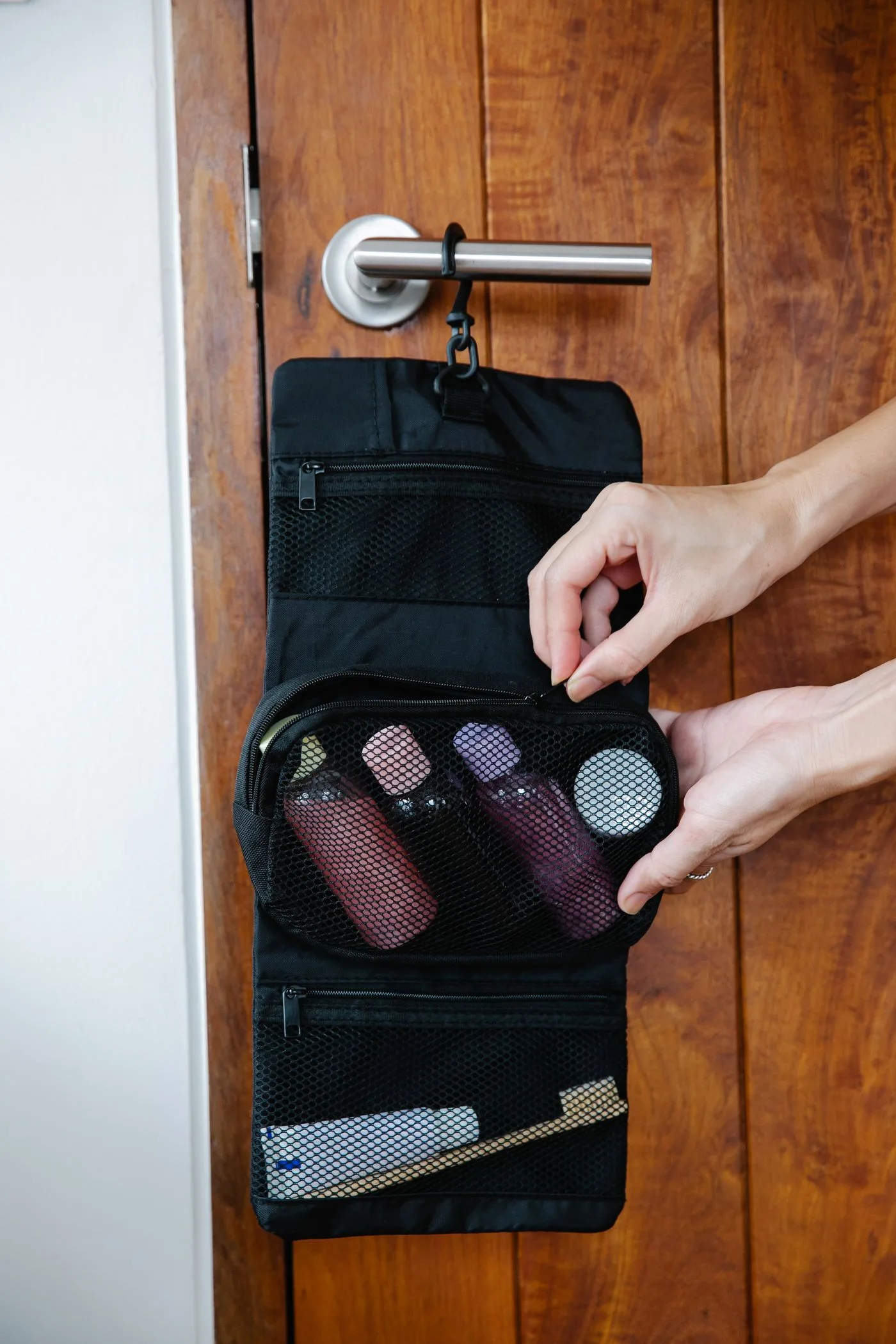
A compact bag should not become a place where old applicators and spilled powder disappear. Choose a container you can inspect and clean according to its material. Keep tools maintained according to their instructions and avoid sharing products in ways the manufacturer advises against. Check product labels for storage guidance and any period-after-opening or expiry information. When you cannot remember when a product was opened, use the manufacturer's guidance rather than assuming appearance alone settles the question.
If you often apply makeup while traveling, consider whether the mirror and lighting are adequate before adding more products. A small personal mirror may be more useful than another complexion item, but it should be practical to carry. Plan the routine for a stable place where you can apply products carefully, rather than expecting a moving train to become the default makeup station.
Shop one genuine gap at a time
Sephora and Nordstrom provide starting points for comparing makeup categories and current product information. Read shade descriptions, intended uses and return policies directly. Where sampling is offered, use it to evaluate suitability before committing, following the store's hygiene procedures. A shade that looks convincing on a screen may look different in daylight or beside your existing products. Product photography is a reference, not a personalized shade match.
Set a budget for the role you need filled. If the current concealer works, replacing it just because a new routine is trending may add cost without saving time. A smaller size can be useful for trial or travel when available, but compare value and the amount you are likely to use before the product's advised life ends. Avoid collecting backups until the product has become a reliable part of the routine.
Keep the morning version intentionally small
Try the edited routine across several ordinary mornings, then remove any step that feels unnecessary for your goal. Keep the fuller collection for occasions when you want to spend more time. A useful everyday bag does not need to represent every makeup possibility. It needs to hold familiar, suitable products in good condition, arranged so that getting ready feels straightforward rather than like a daily shopping decision.
Separate the daily bag from products awaiting a decision. If a shade is unsuitable or a formula repeatedly causes problems, leaving it beside reliable favorites creates another morning choice. Follow appropriate disposal guidance and avoid passing on used products in ways that compromise hygiene. A clear everyday selection is easier to maintain when it contains only products you currently intend to use, rather than reminders of earlier shopping experiments.
Before you decide
- Name two or three everyday priorities.
- Keep one reliable product for each job.
- Follow labels for application and storage.
- Maintain tools and review opening dates.
- Test a new shade before buying backups.
A few useful answers
Are multitasking products always faster?
No. They can be convenient when the formula is suitable for the intended areas and easy for you to use. Compare the actual routine; a familiar separate product may be quicker than a new formula that needs extra correction.
Do I need to replace everything for a simpler routine?
Begin by selecting from what you already own. Remove duplicate choices and practice the order. Buy only when a specific missing function remains, then introduce one product at a time so you can assess it clearly.
Published and last updated September 10, 2026. Send an editorial correction.