Shopping note: We discuss what to look for, rather than claim hands-on testing. Current shopping links are ordinary retailer links. Affiliate disclosure.
Put the contents on the table first
A work tote is easy to buy for the person you imagine being: a notebook, a lipstick and a neatly folded scarf. The real load may include a laptop, charger, water bottle, lunch, glasses and the shoes you are changing into later. Put those objects on a table before shopping. Separate daily necessities from things that have accumulated in the current bag. This gives you a realistic capacity requirement and can prevent an oversized purchase that encourages you to carry even more.
For a New York commute, think about how the bag behaves when standing on a train or passing through a narrow café aisle. A tote that fits everything but constantly slides from your shoulder is not necessarily the right size or shape. Capacity and carrying comfort should be judged together, with the coat you wear most often.
Measure the objects that cannot bend
The laptop and its protective sleeve are the first measurements to check. Compare their dimensions with the bag's stated usable space, not only its widest exterior point. A tapered opening, internal divider or zip can reduce the space available. Look at the opening as well as the base. If the retailer provides only exterior dimensions, ask for clarification rather than assuming your device will fit. Photographs of a computer inside a tote may show a different size from yours.
Next consider the bottle, lunch container and anything else with a fixed shape. A tall bottle can interfere with a zipper or press against a device. A separate leak-resistant container is sensible for liquids, but do not treat a bag pocket as a guarantee against spills. Organize objects to protect delicate items and maintain a load you can carry comfortably.
Choose access and security deliberately
An open tote makes quick access easy, but that convenience comes with less enclosure. A zip closure can help keep contents contained in crowded spaces, while a magnetic or snap closure offers a different balance. Consider your actual route and how often you need to reach for keys, a transit card or a phone. A small internal pocket may be more useful than several compartments that do not fit your objects. Extra organization can also add weight before the bag is filled.
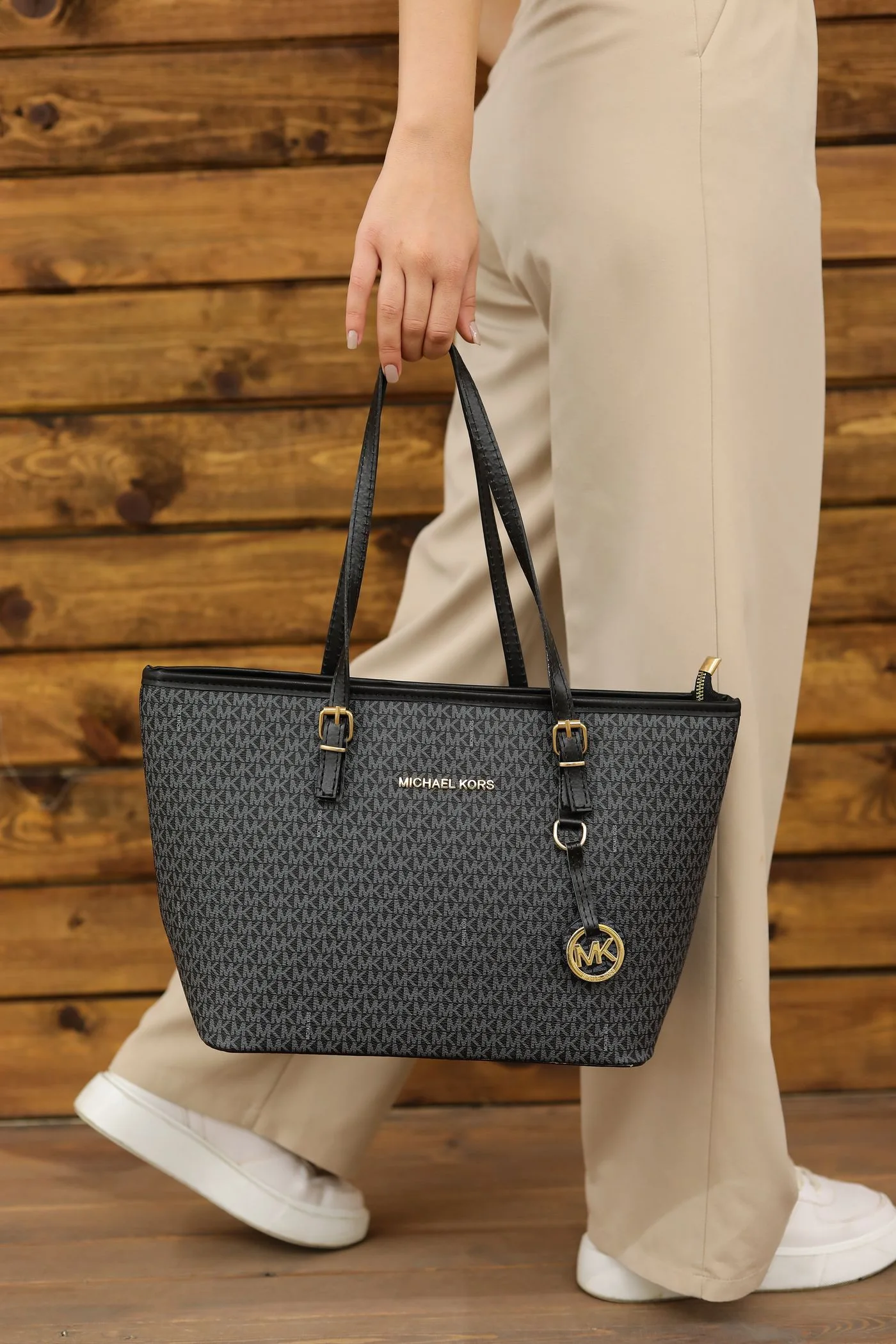
Handle drop matters when wearing a winter coat. Try the bag over a substantial sleeve if possible, and check whether you can remove it easily without catching the cuff. Narrow handles may feel different under load than they do on an empty display bag. If a shoulder strap is included, inspect how it attaches and whether the stated carrying options suit the way you move.
Compare material with maintenance in mind
Leather, canvas and coated fabrics can all be useful, but each specific bag has its own care requirements and weather limitations. Read the maker's instructions rather than assuming a material name guarantees durability or rain protection. Consider the empty weight, lining color and whether the base supports the contents. A pale lining makes small objects easier to see but may show marks; a dark lining may conceal them while making keys harder to find.
Madewell, Everlane and Nordstrom offer starting points for comparing tote shapes and materials. Verify current dimensions, closure details and return terms directly. A discounted bag is still the wrong purchase if your laptop only fits without its sleeve or the filled weight is uncomfortable. If possible, use a permitted home trial with your normal contents before deciding to keep it. Keep any packaging required by the retailer until that decision is made.
Buy one useful role at a time
A work tote does not need to be your evening bag, grocery carrier and travel luggage simultaneously. Define its main role and let a smaller bag or reusable shopping bag handle occasional needs. Before replacing a tote, try removing unnecessary weight and reorganizing the contents. If the problems remain, the measurements and observations you collected will make a new purchase more precise. The best work bag is the one that fits the workday you really carry.
Before the final decision, practice finding your keys without putting the bag on the floor. Then put it down and see whether it stands or collapses in a way that bothers you. Neither behavior is inherently wrong, but it affects daily use. A soft tote may store easily while a structured base may organize rigid contents better. Choose the tradeoff you will appreciate on an ordinary weekday.
Before you decide
- List and measure everyday contents.
- Check usable opening and interior space.
- Try handles over your regular coat.
- Compare empty and filled weight.
- Review closure, care and return conditions.
A few useful answers
Should I choose a larger tote just in case?
Only if the extra capacity serves a recurring need. A larger bag can add weight and make small objects harder to reach. Measure the usual load first, then allow sensible space rather than unlimited space.
Does a laptop compartment replace a sleeve?
Not necessarily. Check the bag's stated protection and dimensions, then decide what your device needs. A divider may organize the laptop without providing the protection you expect from a dedicated sleeve.
Published and last updated April 24, 2026. Send an editorial correction.